ORIGINS
Born on the river
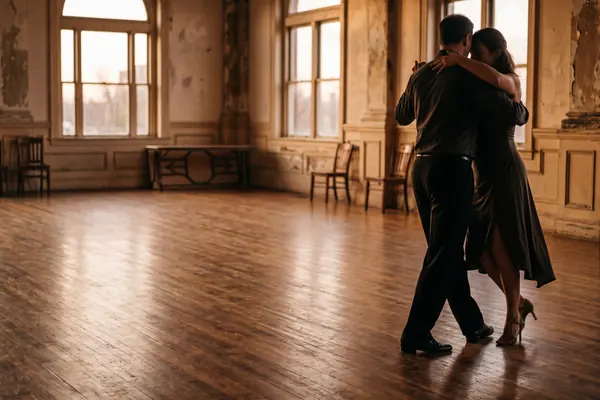
UNESCO says tango was developed by the urban lower classes of Buenos Aires and Montevideo, mixing European immigrants, descendants of enslaved Africans and criollos.
See the numbers aitangodance
HOW THE DANCE WORKS
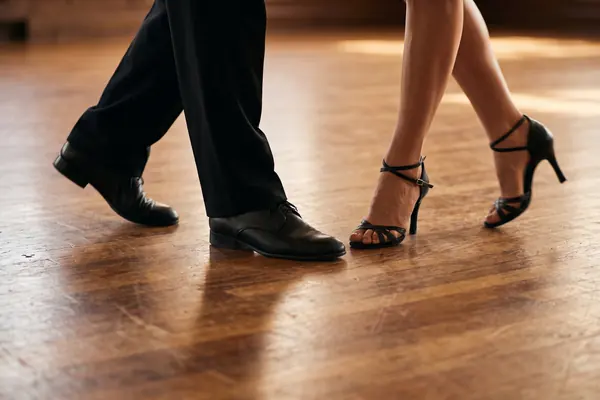
Argentine tango is improvised, in a close embrace.
Read the music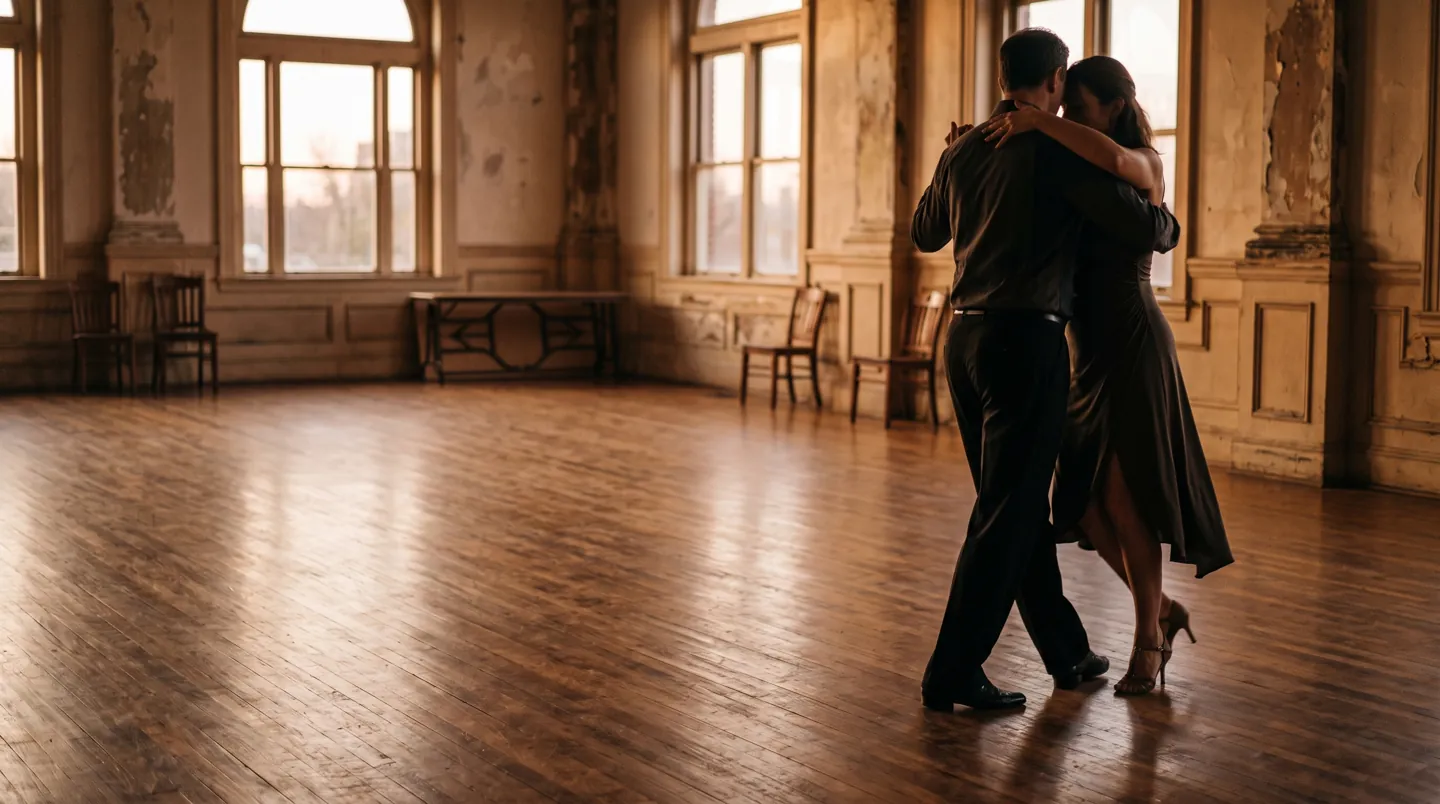
3 OR 4songs per tanda
There is rarely a fixed routine. A leader suggests, a follower answers, and a whole room keeps to a few shared codes: sets of songs, a short break between them and an invitation made with the eyes.
Updated
THE SHORT ANSWER
Tango grew in port neighbourhoods.
Its music, dance and poetry travelled the world.
ORIGINS
UNESCO says tango was developed by the urban lower classes of Buenos Aires and Montevideo, mixing European immigrants, descendants of enslaved Africans and criollos.
See the numbersTHE WALK
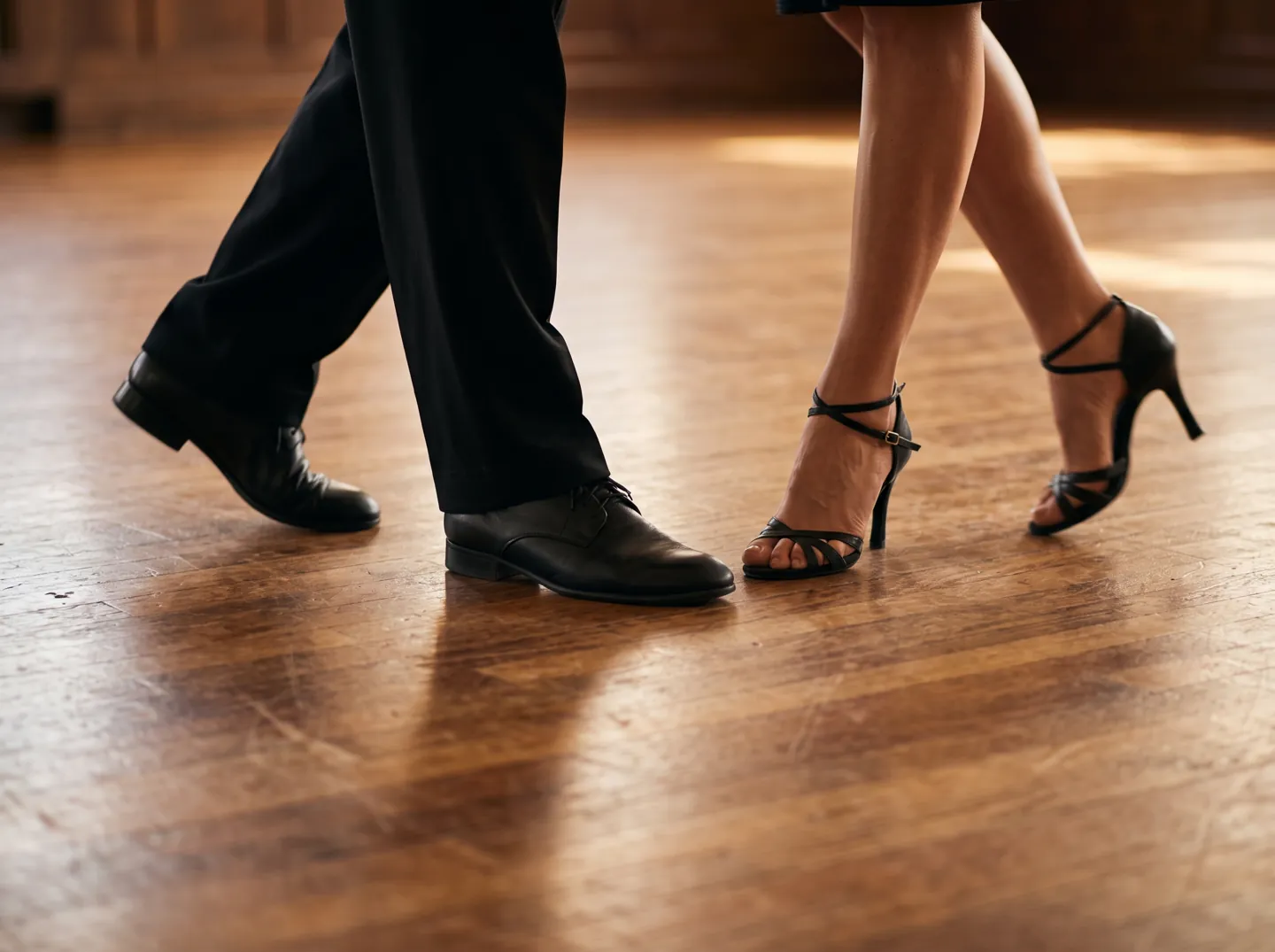
Tango is rarely choreographed. Couples signal the next step with a light pressure of the hand or a shift of the upper body, and improvise as they go.
How to startTHE MUSIC
At a milonga, music is played in tandas of three or four songs, with a short cortina between them so the floor can clear.
Read the musicREADING THE ROOM
Pick what you hear at a milonga to see what it means for the dance floor. The bar shows how long you are committed to one partner.
Based on the usual milonga format. Individual events may vary their rules.
TWO NUMBERS WORTH KNOWING
One figure from the dance lab,
one from tango's own instrument.
≤ 200 ms
Gap between a lead step and the follow
In a 2026 CU Boulder study of five experienced tango pairs wearing EEG caps, when the follower stepped back within 200 milliseconds of the leader's step, their brain waves tended to rise and fall together.
IN STEP · CU BOULDER
25,000
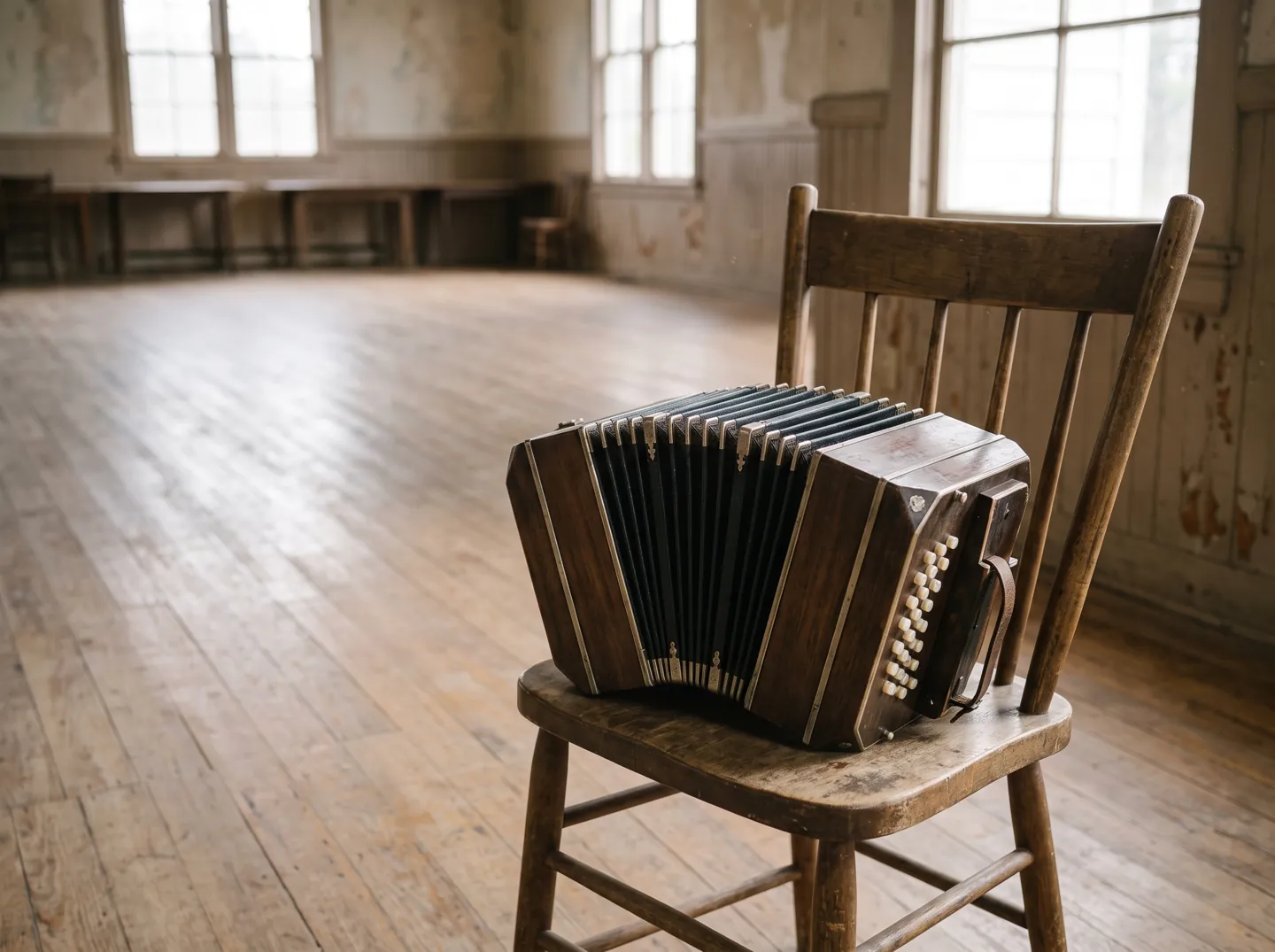
Bandoneons shipped to Argentina in 1930
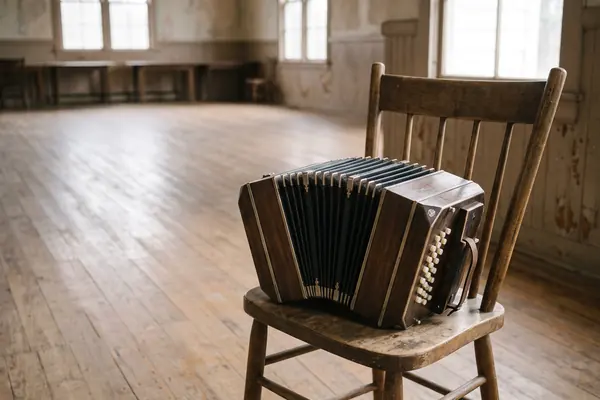
The bandoneon was developed in Germany in the mid-1800s. By 1910 makers were producing it for the Argentine and Uruguayan markets, with 25,000 sent to Argentina in 1930 alone.
THE BANDONEON
The CU Boulder researchers call the matching brain activity interbrain coupling. They also built an early wrist device that vibrates when a pair's brain waves line up, still at an early stage.
FOUR CODES TO KNOW
Milongas keep a few traditional rules about inviting and moving round the floor. Events enforce them more or less strictly, but they are a safe starting point.
A look (mirada) and a small nod (cabeceo) make the invitation. Nod back to accept, or look away to decline. Nobody is ever obliged to dance.
Accepting means dancing the full tanda. Ending early is kept for injury or serious misbehaviour.
Couples circle the floor anticlockwise, in lanes, without rushing or holding up others, and avoid big moves that could hurt someone.
Commenting on a partner's dancing or teaching mid-song is frowned upon, and talking while dancing is usually kept to the start of a song.
FROM PATIOS TO PARIS
Tango was danced in streets and patios of working-class Buenos Aires in the late 19th century, and Afro-Argentines played an important part in its early music and steps. The city's elites at first saw it as dangerous.
Between 1910 and 1920 it became fashionable in Paris, Berlin, Rome and Vienna, though some courts banned it. Touring shows such as Tango Argentino, which opened in Paris in 1983, sparked a revival abroad, and in 2009 UNESCO inscribed tango on its heritage list.
Questions
UNESCO describes tango as an Argentinian and Uruguayan tradition, developed by the urban lower classes in Buenos Aires and Montevideo in the Río de la Plata basin, where European immigrants, descendants of enslaved Africans and criollos mixed.
Tango was inscribed on UNESCO's Representative List of the Intangible Cultural Heritage of Humanity in 2009, after a joint proposal by Argentina and Uruguay.
A set of songs at a milonga: usually three or four tangos, or three valses or milongas, often by one orchestra. A short non-dance piece called a cortina separates the sets.
The usual way to invite someone at a milonga. Two people meet each other's eyes and one gives a small nod. A nod back accepts; looking away declines, which spares everyone embarrassment.
Social tango is rarely choreographed. Dancers improvise, and the leader signals each move through small cues such as a light pressure of the hand or a shift of the upper body.
ABOUT THIS NAME
aitangodance.com is part of the DoodleSale portfolio. It isn't in an auction right now, but you can ask about leasing it.